Steel is widely used in construction thanks to its strength, versatility, and modern aesthetic appeal. Yet, despite its many advantages, steel has one major vulnerability: high temperatures. When exposed to fire, it can lose structural integrity rapidly, posing a serious risk to buildings and their occupants. This is where intumescent coatings play a critical role.
Intumescent coatings are a specialised type of fire protection applied to structural steel. Unlike traditional passive methods such as concrete encasement or cladding, these coatings provide a slimline, aesthetically pleasing solution while maintaining essential fire resistance.
Understanding the Threat to Structural Steel
Structural steel is inherently non-combustible, meaning it won’t burn. However, fire doesn’t need to ignite steel to compromise its performance. At temperatures above 500°C, steel begins to lose its load-bearing capacity. By 600–700°C, it can bend, sag, or even fail entirely under weight.
In buildings like offices, warehouses, and residential towers, even a brief period of steel weakening can endanger lives and cause significant property damage. Modern fire safety strategies, therefore, focus on giving steel “breathing room”—ensuring it maintains strength long enough for safe evacuation and firefighter intervention.
What Are Intumescent Coatings?
Intumescent coatings are specially formulated paints that expand when exposed to extreme heat. Under normal conditions, they appear as a standard coating, sometimes even finished in colours that complement the building design. When temperatures rise, however, a chemical reaction occurs. The coating swells dramatically—often up to 50 times its original thickness—forming a dense, insulating char layer around the steel.
This char layer acts as a thermal barrier, slowing the transfer of heat to the steel beneath. Essentially, it buys time. The longer steel maintains its strength during a fire, the greater the chance occupants can escape safely, and emergency responders can tackle the blaze effectively.
How Intumescent Coatings Protect Steel
The protective mechanism of intumescent coatings can be broken down into three main functions:
- Thermal insulation: The expanded char layer prevents rapid heat absorption, keeping steel below critical temperatures for a longer period.
- Structural integrity preservation: By reducing the rate at which steel heats, the coating helps the steel maintain its load-bearing capacity.
- Controlled degradation: Even as the char eventually burns away, it does so slowly, providing predictable fire resistance performance.
Together, these effects ensure that steel frames in buildings can withstand fire long enough to meet regulatory requirements, often rated in 30, 60, 90, or 120-minute intervals depending on design and building use.
Advantages Over Traditional Fire Protection Methods
Before intumescent coatings became widespread, fire protection for steel relied heavily on passive systems like encasement in concrete or masonry, or installation of bulky boards. While effective, these solutions come with drawbacks:
- Space consumption: Thick layers of concrete or cladding can eat into floor space, limiting design flexibility.
- Aesthetic limitations: Exposed steel, a hallmark of modern architecture, often has to be hidden behind protective layers.
- Installation complexity: Heavier systems require more labour, time, and sometimes structural reinforcement.
Intumescent coatings overcome these issues. Applied in thin layers, they provide the necessary fire protection without compromising aesthetics or architectural intent. For architects and designers, this means steel can remain exposed, maintaining the sleek industrial look many modern buildings favour.
Application Considerations
The effectiveness of intumescent coatings depends heavily on proper application. Simply painting steel won’t guarantee performance; the thickness, surface preparation, and environmental conditions must all be carefully controlled.
- Surface preparation: Steel must be free from rust, grease, or debris to ensure adhesion.
- Coating thickness: The required thickness varies depending on the fire resistance rating and steel section size.
- Environmental factors: Humidity, temperature, and airflow during application can affect drying times and final performance.
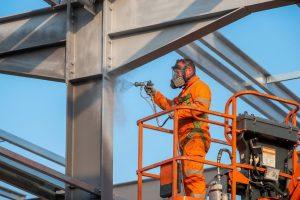
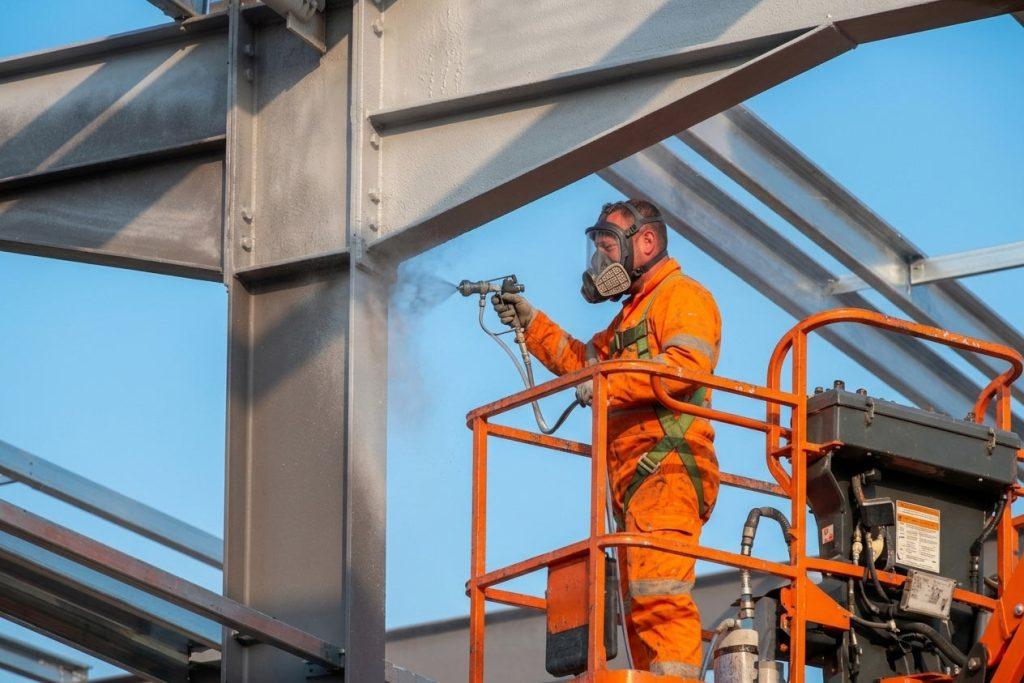
Professional applicators often use spray systems for even coverage, followed by inspection to verify that thickness and finish meet the specification.
Inspection and Verification
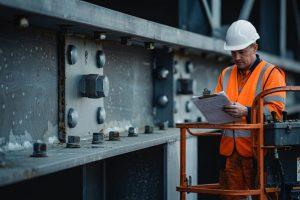
Even high-quality intumescent coatings can underperform if applied incorrectly. Independent inspections are a growing norm in commercial projects to ensure compliance with fire safety regulations.
Inspectors typically check:
- Dry film thickness
- Uniform coverage on all surfaces
- Condition of the steel before application
- Correct curing times and environmental conditions
Documentation from inspections can also form part of the “golden thread” of information required under UK building regulations, providing proof that fire safety measures are properly in place.
Intumescent Coatings in Modern Construction
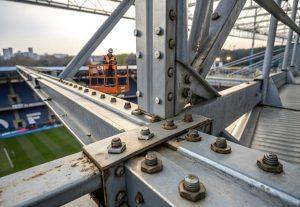
The benefits of intumescent coatings are particularly evident in contemporary architecture. Exposed steel beams, open-plan offices, and high-rise developments often require fire protection that doesn’t interfere with design.
These coatings are also suited to refurbishment projects, where adding bulky protection layers isn’t feasible. Older steel structures can be upgraded to meet current fire resistance standards using intumescent coatings, often without major structural alterations.
Sustainability and Maintenance
Modern intumescent coatings are increasingly formulated to be environmentally friendly, with low VOC content and long-lasting durability. Once applied correctly, maintenance is minimal, though regular inspections are recommended—particularly in high-traffic or industrial settings.
Because the coatings are thin, they don’t significantly add to a building’s weight or require structural adjustments, making them a sustainable choice in terms of materials, labour, and long-term performance.
Final Thoughts
Intumescent coatings have revolutionised fire protection for structural steel. By combining thermal insulation, structural preservation, and aesthetic flexibility, they allow architects and engineers to create safe, visually appealing buildings that comply with stringent fire regulations.
However, like any protective system, their success depends on specification, correct application, and verification. When these elements align, intumescent coatings offer a reliable, slimline solution that keeps steel strong under fire, helping protect both property and lives.
For building owners, developers, and contractors, understanding and investing in these coatings is not just about compliance—it’s about safety, peace of mind, and future-proofing structures against fire risk.